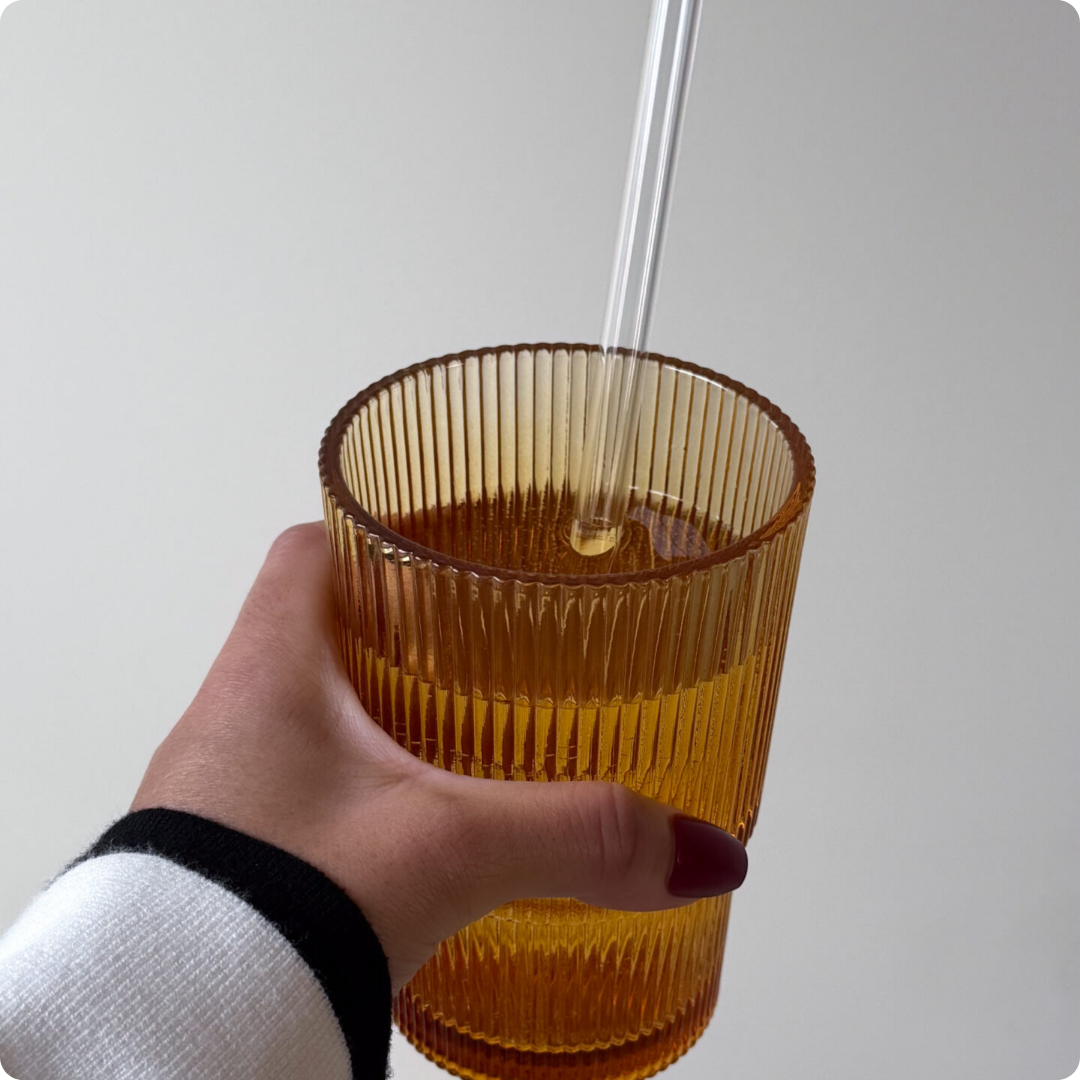
How to Manage Stress and Be Successful in Your Career

“It’s possible to be both serious about your work and serious about your joy.” — Ava DuVernay
Key Takeaways:
-Effective stress coping strategies are essential for early-career professionals to acquire as they transition from school into the workplace.
-Identifying a stress management regimen that is tailored to your needs is necessary for a sustainable career.
Learning How to Effectively Manage Stress Early Sets You Up for a Thriving Career
The stress of college or graduate school cannot be compared to the stress of your first big girl/big boy job.
Once you have your class schedule memorized, the rest of your time is yours. You get to decide what you’re doing, whether that’s studying, making money, or hanging out with friends.
Showing up with your latte in one hand, and rose-colored glasses on the first day at the job is not the same. The expectations, the demands, and the 9-5 (or 6pm or 7pm, people quickly learn) takes some getting used to.
I was not immune to this adjustment period when I started my first full-time therapist position early in my career. There’s a difference between finals week and the ongoing duties of a job. The shift from being on a school schedule to working business hours can be jarring. I had to learn healthy and effective ways to find relief from stress. In some professions, active burnout prevention is just a reality- a requirement, not an option.
If this sounds like you, and you’ve been struggling with managing stress in healthy ways, here are some tips that I would give myself if I was starting as a new professional in my career.

Tips for Managing Stress as an Early Career Professional
Managing stress effectively takes daily intentional action.
When we’re talking about burnout prevention, we are also discussing taking intentional action. Everyday, you need to have one to two small ways to effectively manage the stress that is inevitable to each day. This is a minimal but powerful way to make a huge difference in your overall stress management.
The effects of unmanaged stress compounds.
Neglecting your mental and physical health will take a toll. Ignoring how stressed you feel over time begins to accumulate negative effects. Many chronic conditions are caused by stress, and could have been prevented if addressed early.
You don’t need to reach burnout for permission to take care of yourself.
Referring back to the intentional actions- some people unfortunately see any self-care as something to be earned, or even as a reward. Self-care is necessary, not optional. Finding ways to ease muscle tension, calm your nervous system, or improve your mood regularly is required if you want to stay healthy and effective at your job. You DO NOT have to wait until your mind and body are breaking down to use some of your paid time off (PTO) or to book a massage!
It’s best to diversify how you manage stress. Have many methods, not just one.
One thing to learn earlier rather than later is having several ways to manage stress instead of relying on one. Some people will use the excuse of “self-care is expensive” to neglect it but that’s only because they view self-care as an indulgence or as luxury, instead of the necessity that it is. A spa day is a form of self-care, but it’s certainly not the end-all-be-all. That 5 minute walk you took between meetings, or those 10 minutes where you slipped away to read a book during your busy afternoon are forms of self-care. Scheduling a happy hour with your friends on Friday after a long week of work is self-care. Stress management doesn’t have to be costly, nor does it need to be extravagant.
It’s not helpful to do something self-destructive in the name of managing your stress.
It’s all too easy to give into less healthy ways to manage stress when you’re feeling overwhelmed. Don’t throw out your fitness regimen, over-indulge on junk food, or overdo it with substances with justifications of, “I deserve it” or “I already feel terrible”. This is an awful habit we’ve picked up; choosing the harmful, yet perceived self-indulgent thing is viewed as a right; it’s what we’re supposed to do in response to the amount of stress we’ve endured. I’m not villainizing or shaming partaking in guilty pleasures, but learn how to have this be the exception and not the rule.
Tips for Stress Relief You Can Add Today
If You Prefer Being Active:
Do 10–20 minutes of something that gets your heart rate up—sprints, power walk, jump rope, heavy lifting.
Put on an energizing playlist that boosts your confidence and dance like you’re a superstar.
Try something productive, like setting a 15-minute timer and going on a tidying sprint, creating a brain-dump list, or deciding one tiny action you can complete today and working on it.
If You Prefer a Slow Pace:
Make stress relief a sensory experience; a warm shower or bath, a heavy blanket, aromatic tea, or cooking something grounding while music plays in the background are cozy, comforting ideas.
Get comfortable with low lighting, and contact a trusted person, or spend time writing in your journal.
Do some breathing exercises or ease into some stretches to signal to your body that you are safe.
If You Need Something In Between:
Try something new- go somewhere you’ve never been before, take a class, or listen to a podcast on a topic that interests you.
Do an activity to stimulate your mind; work on a puzzle, tackle a word search, journal using guided prompts, or read a book.
Work on a creative project or start a new hobby.
I hope you find this helpful!
Feel free to share this with someone that just got started in their career, or someone who is mid-career but struggles with managing work-related stress.
As Always, Be Well!
Warmly, Jessica Herd, LMHC-D
P.S. You can sign up here to receive topics like this right in your email inbox.
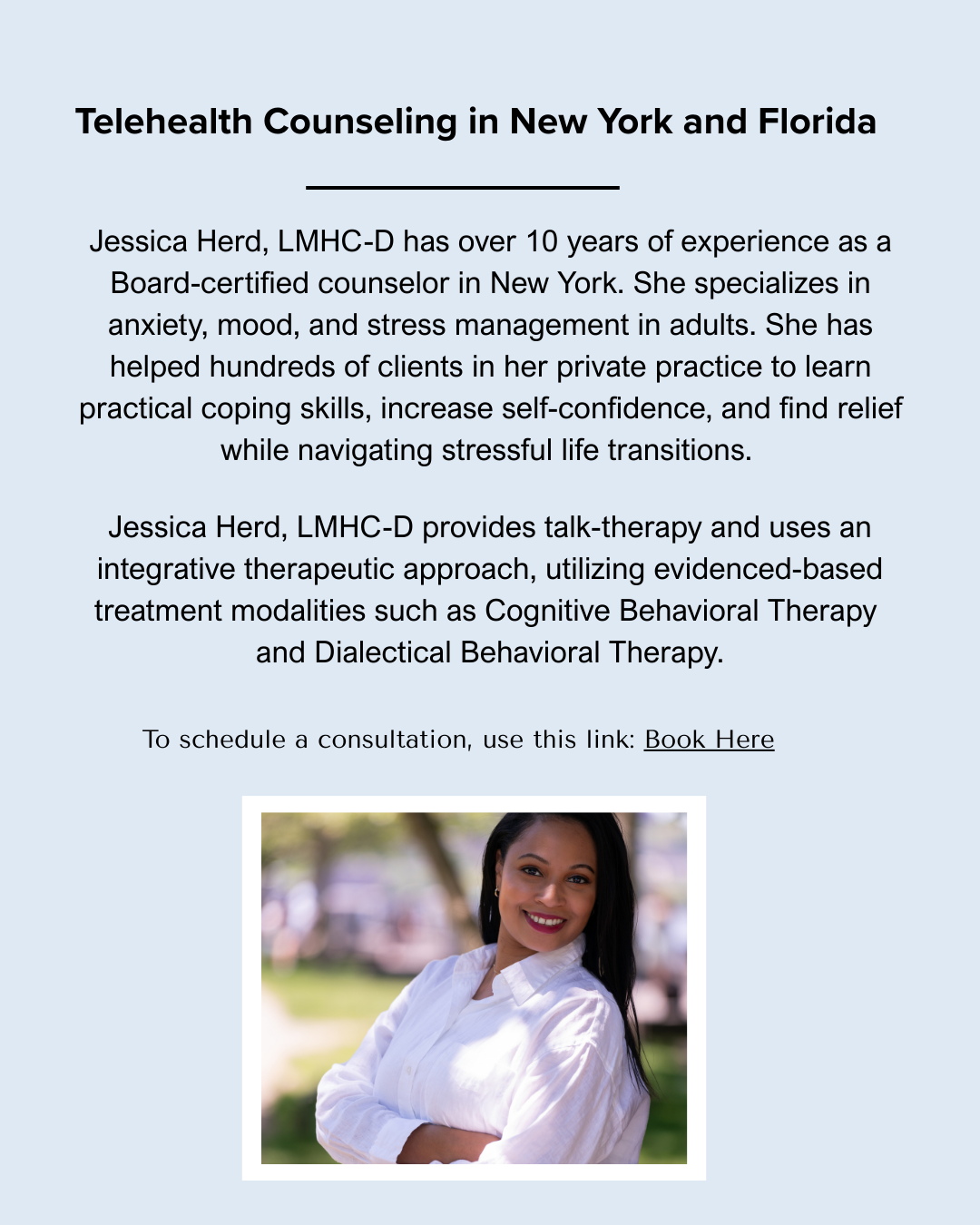
Jessica Herd, LMHC-D is a licensed mental health counselor offering therapy to clients in New York and Florida. Book a free consultation today.
Resources:
National Suicide & Crisis Lifeline: Dial “988”
Text Crisis Line: Text “HELLO” to 741741